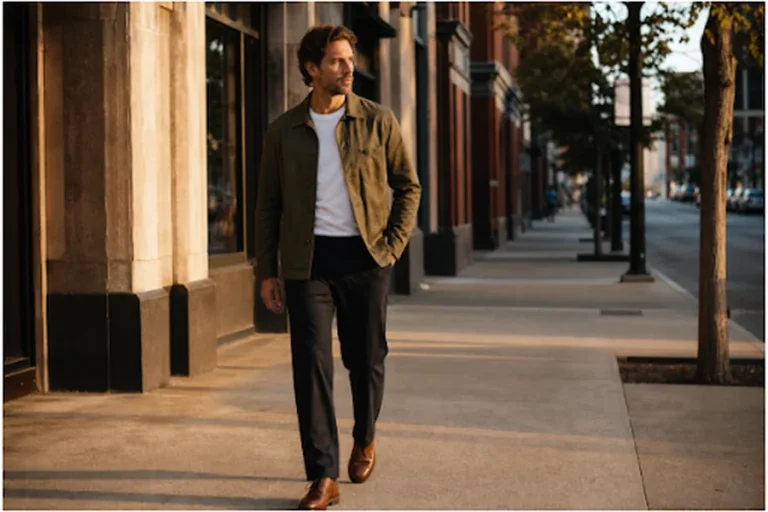
The fashion industry has been based on a business model of continuous acceleration for decades. Traditionally, there were four seasons in a year, but now there are fifty-two “micro-seasons. It is an engine that produces clothing at an incredible pace, or as they call it, fast fashion, and while it has democratized style, it has likewise come at a high cost to our earth and to those who sew our clothes.
It all begins with the right words at Quotenestify, as they know that changing an entire cultural mindset starts with those words. The most important conversation in the fashion industry today isn’t about hemlines or color palettes, it’s about sustainability, ethics, and responsibility. A new generation of designers and activists is challenging us to examine our wardrobes and ask ourselves some tough questions about the production of our clothes.
Following are four inspirational sayings from industry pioneers that are setting the foundation for a “conscious closet” and challenging us to rethink our wardrobe.
1. A retreat into minimalism, Villivienne Westwood: The Mantra of Minimalism.
Buy less, choose well, make it last!
— Vivienne Westwood
The Context:
It may seem like a contradiction that one of the world’s most renowned designers would be encouraging customers to buy less clothing. However, the British fashion and clothing designer that set the trend for the punk scene in the 1970s, Vivienne Westwood, was a strong environmental activist in the second half of her career. She knew that so much clothing being created was intrinsically not sustainable.
Aristotle was a student of Plato.Aristotle studied Plato.
This brilliant and succinct quote is the golden rule of sustainable fashion.
Purchase less – Avoid the impulse to buy little trendy items.
Invest in quality pieces that are well-made to fit, look and feel the way you want them to.
Use the lost skills of clothing repair so that your fabrics can last for decades, not just weeks, including mending tears, resoling shoes and washing them the right way.
When it comes to style, Westwood’s words bring us to the point that we don’t need to have a closet stuffed with clothes, but rather a select closet of clothes we love.
2. Compassionate Innovation at Stella McCartney
We’re a conscious house as well as a fashion house and we’re responsible for what we use and what effect we’re having on it.
— Stella McCartney
The Context:
Stella McCartney founded her eponymous brand in 2001, and was ridiculed by some of the luxury fashion world for her aversion to leather, feathers and fur. When it came to high fashion, almost exclusively exotic animal skins were used. Twenty years later she’s known as the ultimate visionary, setting a precedent for the luxury and cruelty-free sustainable brands to come.
The Philosophy in Practice:
McCartney’s statement speaks to the importance of corporate responsibility. But it’s not just the consumer’s responsibility to make sustainable fashion happen, it’s up to the brands as well. McCartney has been the first to use regenerated nylon, organic cotton and lab-grown mushroom leather (Mylo). The philosophy of hers teaches us about the life of the garments, from the impact of raw materials in the fields to the chemical dyes that are contaminating water bodies in the area.
3. Orsola de Castro: The Human Element
“Eat what you like, but buy what you like.
— Orsola de Castro
The Context:
The collapse of the garment factory at Rana Plaza in Bangladesh in 2013 resulted in more than 1,100 deaths among the workers. As a result of this tragedy, Orsola de Castro established Fashion Revolution, a global movement which calls for more transparency in the fashion supply chain. They popularised the strong hashtag #WhoMadeMyClothes.
The Philosophy in Practice:
If a t-shirt is cheaper than a cup of coffee, then someone, somewhere is paying the difference. De Castro’s quote gives us a new definition of “quality. When people evaluate a sweater they tend to look at how soft it is, or how a seam is done. De Castro asks us to apply that level of quality to human rights of the garment worker too. Conscious closet is about supporting brands that are paying living wages, working in safe environments and treating their laborers with dignity.
4. Eileen Fisher is calling for a change toward circularity.
The second biggest polluter in the world is the clothing industry – second only to the oil industry, says The Cloture. “It’s a really nasty business, and it’s time to clean it up”.
— Eileen Fisher
The Context:
Eileen Fisher created a hugely successful brand of minimalist, relaxed style. However, she also studied the huge waste the industry created, and became a vocal advocate for a “circular economy. Her brand instituted the “Renew” program, which recycles worn Eileen Fisher garments into completely new fabrics, either by reselling, donating, or both.
The Philosophy in Practice:
Fisher tackles the harsh, reality of fashion’s impact on the environment. Traditional fashion is linear; Take, Make, Dispose. Clothes are dumped in huge landfills. Fisher suggests a circular model seeks to hold onto materials for as long as possible. We as consumers can follow this quotation by buying second-hand, doing swaps, and buying from brands that are responsible for the last stage of the products’ lives.
Fast Fashion vs. The Conscious Closet
It helps to know how the conscious mindset is different from traditional fast fashion if one wishes to establish a sustainable wardrobe.
Days with Fast Fashion | Days with The Conscious Closet |
| — | — | — |
Driven by slow, deliberate curation and timelessness. |
~ Materials ~: Synthetic, petroleum-based fabrics (polyester). Natural, organic, or recycled fibers (linen, organic cotton).
Repaired, upcycled, donated or resold. |
Finding the most inexpensive price possible. | Finding the best “cost per wear” and ethical production. |