In 2023, a Mandarin-language paper described a training method an English-speaking lab spent eighteen months rediscovering. The paper had been public the whole time. The team could not read it. WisPaper, an AI academic agent, is built for this situation, where the barrier is language, not access.
The Language Wall
A researcher facing a paper in a language they do not read is missing more than a dictionary. How the authors reasoned about a method, and which details they considered fragile, sit behind the words. A colleague’s summary compresses that away and leaves only the headline result. WisPaper treats this as a reading problem rather than a translation one.
Paste It Into a Translator
The first instinct is to feed the paper to a general machine translator. The sentences come back fluent, and fluency hides where the meaning snapped. Graduate students and postdocs feel this most sharply: the English reads smoothly, so they trust it, and the damage surfaces later in a failed experiment. A translation that looks finished is more dangerous than one that looks broken.
When Technical Terms Go Wrong
Technical terms are the first casualties. “Attention mechanism” becomes a phrase about watching, and “gradient descent” becomes a literal walk downhill, neither of which survives contact with an actual model. A general translator has no way to prefer the machine-learning reading over the everyday one. A Chinese-character shorthand for a loss function has no clean equivalent, so the translator guesses, and the guess arrives dressed as confident English.
Reading in Place, Not Line by Line
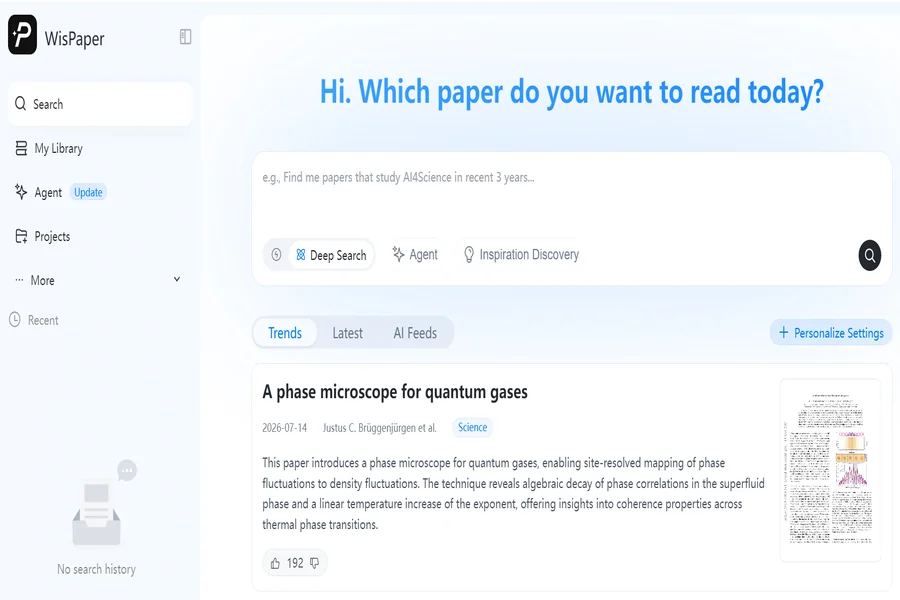
AI-assisted tools are changing the unit of reading. Instead of translating a whole paper and hoping, WisPaper keeps the original text in place with a bilingual view, so a reader checks the source sentence alongside the English. This AI academic agent pairs that with an immersive reading mode, a blog-style easy-reading view, and cloud-synced notes. Deep Search finds papers by intent, and My Library keeps them in one synced collection for full-text questions.
Research Without Borders
When reading in place works, a team stops depending on what happens to be published in English. A 2023 Mandarin paper is no longer a mystery to be rediscovered eighteen months later; it is a source that can be read, checked against its own notation, and cited.
The quiet change is that researchers can finally read without translating everything first. That shifts which papers get noticed and which ideas get built on.