Unrealistic surfaces, artificial lighting, or movement of objects that don’t fit into reality will be noticed by the audience of modern video immediately. The use of real materials contributes to visual trust and helps in the perfection of advertising, education, entertainment, and product presentations. Pippit offers creators high-level video creation features to improve the quality of texture details, scene consistency, and lighting effects. The accurate rendering enables every frame to look more convincing and helps to tell a professional story. The guide below offers you some practical ways, essential steps in the workflow, and editing methods to develop very realistic video materials.
Understanding Material Authenticity in AI Video Generation
Material authenticity is the accuracy of how digital objects are modelled with respect to their real-world counterparts, in terms of texture, reflection, lighting, and motion. Realistic materials cannot be done without light, as it reveals the depth, roughness, transparency, and fine detail on the surface. The right texture precision will make the visual experience better, avoiding flat and unnatural scenes in different situations. Color, reflection, and proportions that are believable are also maintained throughout all transitions for stability in objects. If you are displaying the product in showcases, the fashion video, the presentation of the architecture, or if you want to tell a story in a film, then good material authenticity makes everything more credible and coherent, from the beginning to the end.
How Pippit Produces More Realistic Visual Results
Combined with the advanced rendering technology, Pippit’s intelligent scene management generates compelling visuals for a broad spectrum of creative projects. Its AI video generator creates high-fidelity rendering, capturing the subtle details, lighting balance, and textures of surfaces. Director-level camera moves are cinematic moves, with no distracting “frame-to-frame” jitters. Physical motion simulation improves the natural object behavior by simulating realistic motion, believable deformation, and in-between interaction with surrounding objects. Intelligent scene guidance helps to maintain the consistency of the composition with key subjects in visual alignment with one another, retaining the lighting relationship between different scenes in related sequences.
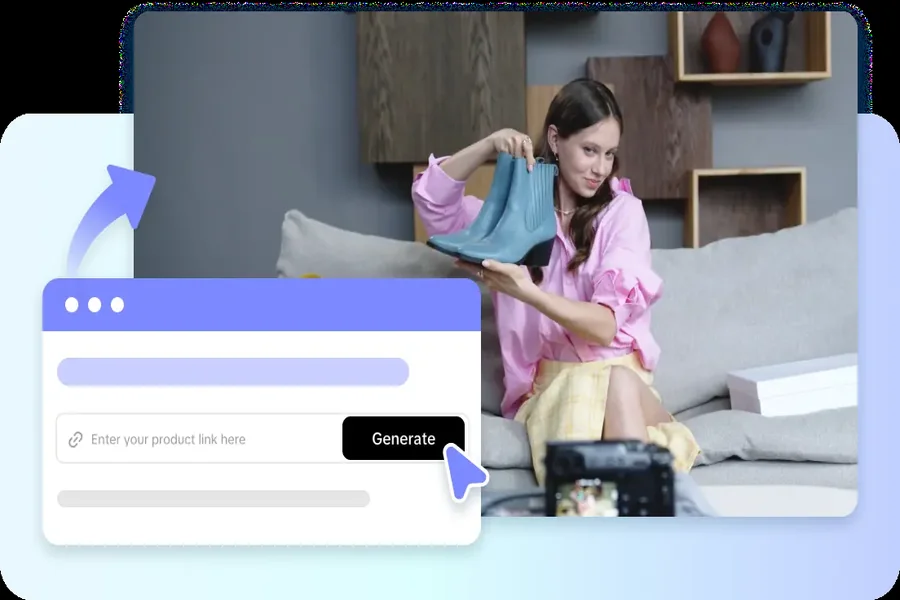
Steps to Generate Material Authenticity in Videos with Seedance 2.5
Step 1: Define realistic material details
-
Create a Pippit account using Google, TikTok, or Facebook info.
-
Open “More” and access “Video generator” from the left menu.
-
Select “Dreamina Seedance 2.5” for realistic material videos.
-
Add a prompt describing textures, surfaces, lighting, and material details.
-
Select video length, language, subtitles, and aspect ratio.
-
Upload reference images or videos using “+” from your device, phone, Dropbox, or a link. You can also select assets.
-
Click “Generate”.
Step 2: Generate realistic videos
-
After clicking “Generate,” Pippit’s AI video generator creates videos based on your prompt and references.
-
The AI enhances transitions, pacing, captions, avatars, voice, lyrics, and visual effects.
-
Review the generated material-focused video.
Step 3: Edit and export
-
Save the video using “Download”, create another version with “Regenerate”, or edit using “Edit more”.
-
Customize captions, text, size, colors, alignment, filters, and effects.
-
Add music, remove backgrounds, and refine visuals.
-
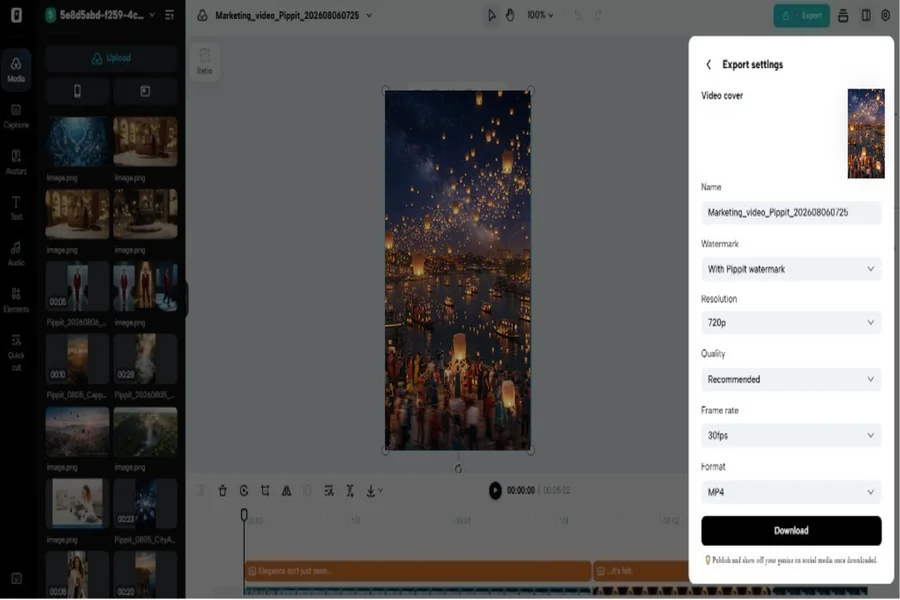
Click “Export” after final edits.
-
Choose “Publish” for social platforms or click “Download” with your preferred format, resolution, frame rate, and quality.
Using Prompt Design to Improve Material Realism
Detailed prompts offer clear creative guidance and support consistency of visuals through scenes generated. Describe surface textures accurately with words, rather than using general words, such as glossy, rough, transparent, soft, or metallic. Specify lighting conditions: intensity, direction, colour temperature, and time of day, as all visible material properties are influenced by lighting. Pay close attention to camera angles and make sure they reveal good surface detail, but not distortion or obtrusive detail. Add environmental details such as nearby objects, weather, architecture, or interior environments, as elements surrounding the scene will affect the reflection, shadows, and how materials look throughout the scene.
Features That Strengthen Material Authenticity
Several built-in features of realism help make Seedance 2.5 more realistic and help give all productions a more uniform visual style.
-
Realistic motion logic for believable motion and interaction with natural objects.
-
High-fidelity visual rendering improves lighting, texture, and material fine details.
-
Multi-modal references are used to go to scenes with the correct product or visual reference assets.
-
Timestamp prompt control ensures realistic transitions between the connected video sequences.
-
Green Screen Editing is used to replace the background without compromising the seamless look.
-
Continuous video generation can be used for longer scenes without having to break the continuity of the material.
Refining Material Appearance with Pippit’s Editing Tools
Post-generation is crucial, as subtle details can greatly influence the realism. Balanced color correction will ensure that the colors of the materials in the image will be preserved and will not be too light or too saturated. However, when contrast is improved, image clarity is improved, textures, edges, and fine surface details are separated, and any subtle information is retained. Caption adjustments keep the text legible, but do not obscure important visual elements or interfere with composition. The lighting direction, color balance, perspective, and object interactions of the environmental replacements should be similar to the rest of the scene, to help with scene consistency. Careful editing of the photos creates coherent videos from the first frame to the last transition.
Best Practices for Achieving Authentic AI-Generated Materials
High-quality reference assets are helpful for visual reference, as they will accurately depict colours, textures, proportions, and lighting qualities. Using clear scene description can reduce confusion and ensure consistency between connected video sequences. A balance of light is important in all scenes; a combination of too much light and too little light will rapidly make a scene unrealistic and can be distracting to the viewer. Before exporting, take care to inspect every single draft for any texture problem or unrealistic reflection, lighting, or irregular movement. Doing several passes of refinement will make it better than doing it right away and exporting it because it will make the image look more professional.
Common Mistakes That Reduce Material Realism
The absence of the use of reference media means that valuable input is lost to assist in the improvement of product look, product make-up, and lighting accuracy. When using multiple visual styles in a project, the change between different styles will be unnatural, and the materials will behave differently from scene to scene. When exporting, if you don’t check the accuracy of the texture, there will be visible problems in the completed video. By thoughtfully considering the potential problems with reflections, motion of objects, direction of light, and consistency of surfaces, a refined final product is achieved before publication.
Conclusion
The use of realistic materials helps to enhance the visual credibility, as they combine accurate textures, balanced lighting, natural movement, and consistent scene composition. With all the generation, editing, refinement, and export capabilities neatly under one roof, Pippit makes professional video production easy. The realistic effect is always achieved with the help of good prompts, trustworthy reference materials, precise light analysis, and conscious editing enhancements. These practices guarantee that each finished piece contains interesting graphics, instills trust and confidence in its viewer, and allows for finished stories in a variety of creative applications.