Choosing a preschool is a big decision for many parents. It is often the first structured learning environment a child experiences, so parents naturally want to know what happens during a typical school day.
A Singapore preschool can offer much more than early academic preparation. Young children may spend their day playing, exploring, listening to stories, creating art, moving around, socialising with classmates and developing everyday skills. KiddiWinkie Schoolhouse preschool in Singapore provides an option for parents exploring early learning environments that encourage children’s growth through engaging, age-appropriate activities. These experiences are designed to support different areas of early childhood development while helping children become comfortable in a group learning environment.
Although every preschool has its own timetable and teaching approach, understanding what a typical day may look like can help parents know what to expect.
Starting the Morning
The school day often begins with arrival and settling-in activities. Children may enter the classroom, greet their teachers and classmates, put away their belongings and choose from simple activities.
This part of the morning can be particularly important for younger children. Some may walk into the classroom confidently, while others may need reassurance after saying goodbye to their parents.
A familiar arrival routine can help children understand what happens next. Over time, repeated routines can make the school environment feel more predictable and comfortable.
Teachers may also use this period to observe how children are feeling and whether anyone needs additional support before the day’s activities begin.
Morning Circle and Group Activities
Many preschool programmes include some form of group gathering during the day. Children may sit together with their teacher to talk about the day, sing songs, listen to a story or discuss a particular topic.
Group activities provide opportunities for children to practise listening and communication. They may be encouraged to answer simple questions, share something about their experiences or listen while another child is speaking.
These sessions can also introduce early concepts such as numbers, colours, shapes, letters, weather or the environment. The approach is usually adapted to the children’s age rather than resembling a formal primary school lesson.
The aim is often to make learning interactive and engaging rather than expecting young children to sit still for long periods.
Learning Through Play
Play is an important part of early childhood education. In a preschool classroom, children may have access to different play areas where they can build, pretend, draw, read or explore materials.
For example, children playing with building blocks may be learning about shapes, balance and spatial relationships. Pretend play can encourage communication and imagination, while puzzles can introduce simple problem-solving.
Teachers can participate in these activities by asking questions, introducing new vocabulary or encouraging children to think about different possibilities.
This type of guided play allows children to learn while doing something that feels natural to them.
Early Language and Literacy
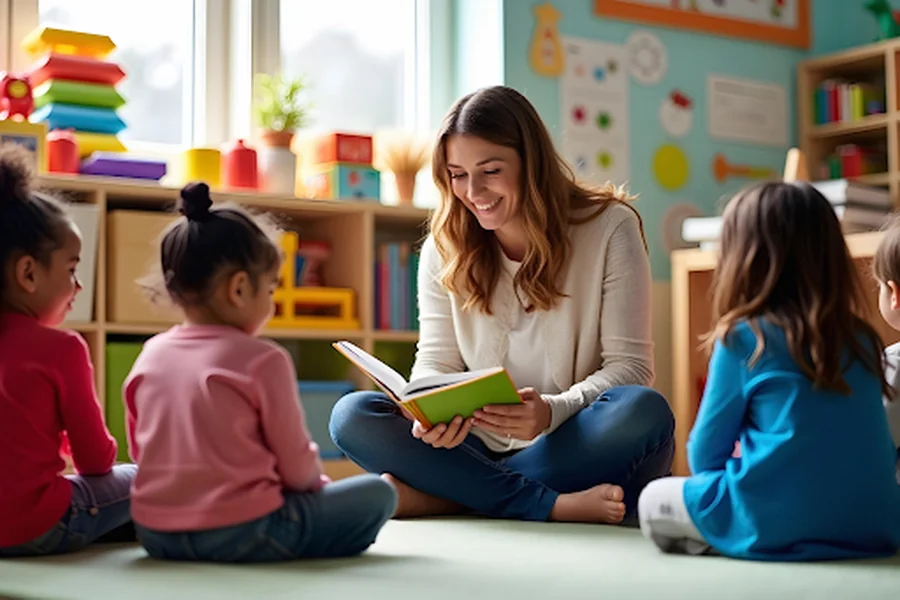
Language development is another important part of the preschool experience. Children may listen to stories, learn songs and rhymes, look at picture books and participate in conversations.
Teachers may ask children questions about a story or encourage them to describe what they see in a picture. These simple interactions can help children expand their vocabulary and become more comfortable expressing their thoughts.
Depending on the preschool programme and children’s age, activities may also introduce early literacy concepts such as recognising letters, sounds or familiar words.
The emphasis at this stage is generally on building a positive relationship with language and books rather than rushing children through formal academic content.
Mathematics and Everyday Concepts
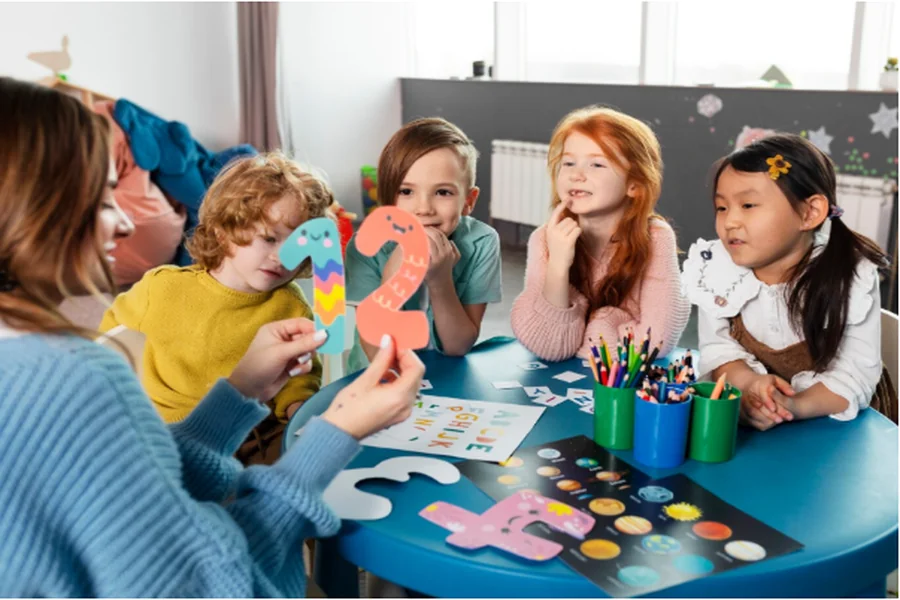
Early mathematics can also be introduced through everyday activities. Children may count objects, compare sizes, identify shapes or recognise simple patterns.
These concepts can be introduced through games and practical experiences. For example, children might count toys while tidying up or identify shapes while working on a craft project.
This approach can help children understand that numbers and mathematical ideas are part of their everyday surroundings.
The level of activity will naturally depend on the children’s age and development. A preschool classroom is not expected to look like a primary school mathematics lesson.
Creative Activities
Art, music and other creative experiences can form part of the preschool day. Children may draw, paint, make simple crafts, sing songs or explore different sounds and instruments.
Creative activities give children opportunities to make choices and express themselves. A teacher may provide materials and guidance without expecting every child to produce the same result.
This can also support fine motor development. Holding crayons, using brushes, cutting with child-safe tools or manipulating craft materials can give children opportunities to practise hand and finger movements.
The process is often more important than producing a perfect finished piece.
Outdoor and Physical Play
Young children need opportunities to move throughout the day. Depending on the preschool’s facilities and schedule, children may have outdoor play or indoor physical activities.
Running, jumping, climbing, and simple movement games can support coordination and physical development. Group games can also teach children about taking turns, following instructions and playing safely with others.
Physical activity can also provide a useful change of pace after quieter classroom activities.
Parents considering a preschool may therefore want to understand how the programme balances seated activities with active play.
Social and Emotional Development
One of the major benefits of preschool is the opportunity to interact regularly with other children.
Children are still learning how to manage emotions, communicate their needs and respond to other people’s behaviour. Disagreements over toys, difficulties taking turns and moments of frustration can all happen during the day.
Teachers can help children understand these situations and practise appropriate ways of responding.
Children may learn to ask for a turn, express how they feel, listen to another child or seek help from an adult. These are valuable skills that develop gradually through repeated experiences.
Quiet Time and Rest
A preschool day can be busy, so children may also have opportunities for rest or quieter activities.
Depending on the child’s age and the preschool’s programme, this may involve a nap, quiet reading, listening to stories or calm independent activities.
Rest can be particularly important for younger children who may become tired after a morning of physical and social activity.
A well-structured routine generally provides a balance between energetic activities and quieter periods.
How Teachers Guide the Day
Preschool teachers do much more than supervise children. They create activities, observe children’s development, encourage participation and provide support when difficulties arise.
Teachers may adjust an activity when they notice that children need more time or introduce a different approach when something is not engaging the group.
They also help establish classroom routines. Knowing when to tidy up, move between activities, wash hands or prepare for meals can help children become familiar with the structure of the school day.
Communication between teachers and parents can also help provide a clearer picture of a child’s progress and adjustment.
Preparing Your Child for Preschool
Parents can make the transition easier by introducing simple routines before the first day. Practising tasks such as putting toys away, washing hands, carrying a small bag or following basic instructions can help children become more comfortable with independence.
Talking positively about preschool can also help. Parents can explain that their child will meet teachers, play with other children and take part in different activities.
At the same time, it is normal for a child to feel nervous. Starting preschool is a significant change, and some children need more time than others to adjust.
Conclusion
A typical day inside a Singapore preschool can include much more than academic activities. Children may spend their time learning through play, stories, creative work, physical activity, social interaction and everyday routines.
These experiences can help children develop communication skills, confidence, independence, coordination and early understanding of the world around them.